- Nothing Is Wrong With Your Brain December 2025
- Advice For The Caregivers October 2025
- Anger August 2025
- Humor Is A Painkiller! June 2025
- Catastrophic Thinking February 2025
- Holiday Woes? December 2024
- CRPS: Symptoms Physical And Non-Physical October 2024
- Fear And Stubborn 100% August 2024
- Where Do I start? June 2024
- CRPS Type 2 and Visualization Method April 2024
- Fight Or Flight Response February 2024
- Target Fixation December 2023
- Mindbody Healing Is Learning October 2023
- Why Meditation Works? Take A Deep Breath! August 2023
- Doing Too Little or Doing Too Much? June 2023
- Purpose In Life April 2023
- Dealing With Emotional Trauma February 2023
- Self-compassion December 2022
- Magic Pill October 2022
- The Myth Of The Diagnosis And Symptoms August 2022
- Hostages Of Pain June 2022
- Cognitive-behavioral Therapy and TMS Therapy April 2022
- Cure vs. Healing February 2022
- No Longer A Victim! December 2021
- Anxiety October 2021
- Five Stages Of Mindbody Healing July 2021
- Eye-Opener May 2021
Eye-Opener
Somebody asked me recently: how did you feel when you first learned about mind-body approach to CRPS? It has been over 5 years, but I still vividly remember that day when I finished reading Dr. Sarno’s book Mindbody Prescription. At first, it was absolute, total disbelief. No, my mind was telling me, it cannot be that simple!!! Why all other doctors have not arrived on the same idea? Why was I told to subject myself to all kinds of invasive treatments when result can be achieved by simply adjusting the way you think about your pain? But the book was so logical, persuasive and straightforward! It also had thousands of extremely positive reviews written by grateful readers, and it was obvious that those reviews were sincere, truthful and by no means fake.
My head was spinning. On one hand, the book promised a miracle. On the other hand, I knew darn well that miracles did not exist. On one hand, the book put the control over recovery from chronic pain squarely in the hands of a patient, which was so much better than dealing with the maze of the healthcare system. On the other hand, it left me with a full responsibility for my recovery. It made me feel equally liberated by putting power in my hands (no pun intended), and burdened with the work of healing, which, looking back, was much harder than I initially thought it would be. I soon learned that my brain was much more stubborn than I could expect, but still trainable!
Looking back, I can tell that my newly acquired knowledge changed my life forever. It made me a stronger, more confident and more compassionate person. Not only I understand myself much better now, I am better equipped to handle my relationships with other people, I am more open to new experiences and new ideas. But most importantly, I am healthy and I know how to manage daily stresses of my life so inevitable occasional pains caused by stress heal quickly.
Five Stages Of Mindbody Healing
Mindbody healing is not a simple or linear process. Mind does not work like a switch. It takes time and effort to re-wire your brain and un-learn the information that was being imprinted in your brain for years. Once people learn that there is a mind-body path to healing from any chronic pain, most of them go through five stages. I call them five Ds of TMS healing.
Stage 1. Disbelief. Almost everybody starts with disbelief, because it is very hard for them to accept the fact that their pain is induced by the brain. Their brain, trained in the opposing theories, offers many ways to go back to convenient knowledge:
- My pain feels so physical, it must be structural.
- I have a herniated disk, and I have my MRI to prove it.
- My EMG shows that I have a carpal tunnel syndrome, there is a structural damage to the nerve
- Doctor such-and-such told me that I have a pinched nerve
- Swelling or skin changes cannot be induced by the brain
I am sure, this list can continue forever.
Well, multiple studies were done to show that back pain is not a result of a herniated disk, but rather a coincidence. Study after study show that spine deformities are equally present in those with chronic pain as they are in those without chronic pain. Here is one of them, from the United States, and another one, from Japan. Orthopedic surgeon Dr. Bruce Moseley conducted a clinical study comparing an arthroscopic knee surgery for osteoarthritis to a placebo one. He found no difference in the outcome. Now, for those who are still stuck on skin changes: it has long been a well-accepted notion that acne and rosacea are known to be triggered by stress.
Disbelief is normal. Every revolutionary idea starts with disbelief. And that’s OK. What makes a productive revolutionary idea different from an unproductive revolutionary idea is that it stands the trial by practice. Thousands of people around the world have proven Dr. Sarno and the mind-body method right by simply using it and healing. If you are in disbelief, you are welcome to continue questioning this theory. However, keep your mind and eyes open to the facts and try to accept them instead of resisting or ignoring them. Only then you will progress to the next stage of healing.
Stage 2. Doubt. Regardless of how much or how little time you spent on stage 1 – a year or just one minute, you will inevitably enter stage 2, which is doubt. If you have not sufficiently disposed of your disbelief, with every spike in pain your mind will continue going back to the concept of structural damage. Why? Because your mind is searching for easy solutions: a pill, a surgery, an injection. Because the advances of our modern medicine in fighting bacterial and viral infections, in developing amazing surgical techniques and painkillers or amazing diagnostic technologies conditioned us to believe that there is an instant solution for every illness. Well, mind-body healing is hard work, and it is slow, especially for CRPS, which manifests itself with very complex and widespread symptoms. Usually, there is no instant relief and no instant gratification. But eventually you will convince yourself that slow but successful healing is better than an endless search for a magic pill. Sometimes people even accept that some of your mind-body symptoms (for example, pain) are psychosomatic, but the rest of them (swelling, rash or spasms) are not. Acceptance is often a gradual and painful process.
Still, once you get over those doubts and firmly convince yourself that your pain is, in fact, of psychosomatic origin and can only be defeated by a mind-body approach, there is another doubt waiting for you. You begin to doubt yourself and your ability to beat your pain. This one is the biggest obstacle on your path to recovery. This doubt comes in different shapes and shades. You may be worrying that you are not going through the right steps, or that your choice of the methodology is wrong. It may be that you decide that you are lacking skills or even capacity to re-wire your brain. My advice to you is very simple: as long as you understand that everybody has doubts but most of us succeed with enough effort – you will eventually overcome your doubts and move on to the next stage.
Stage 3. Disappointment. This is another likely period for those who made it past doubts. You have done all the work understanding the mind-body connection with regards to pain, you are now diving deep into your emotions, you are working through your childhood traumas, you are meditating every day, but your pain is not going away. Or maybe your original pain is down, but your anxiety is now through the roof. This is the time when you start wondering whether you wasted all of your time on this Dr. Sarno mind-body business and you would be much better off by just getting a prescription for an opioid painkiller or look for a good surgeon to fix your problems.
However, I have very good news for you: you are closer to success than you think. Increase in the levels of anxiety, depression or OCD is in fact a very good sign. It indicates that your pain has psychosomatic origin. The same applies if your pain moved to a different location. Everybody goes through this period. Why? Because good things never come soon enough and because there are no free lunches. People who developed CRPS often have a long history of stress, difficult life situations and even tragedies. It takes a lot of damage to make the nervous system fall apart to the point that it creates symptoms of such intensity in different parts of the body. But that also means that you must put a lot of time, effort, and patience into climbing back to normal. And with time, patience, and effort, you will get to the next stage, Determination. But for now, keep working!
Stage 4. Determination. This stage, when I switched from despair and anxiety caused by my CRPS to hope and determination, was maybe the most exciting time of my life. My hard work was paying off and the sense of personal achievement in beating this officially incurable illness was exhilarating. I felt like a mountain climber feels being a hundred feet away from the peak of Mount Everest. So, what one should expect at this stage? By now, you have seen small improvements. You were able to achieve occasional reduction of some or maybe even all of your symptoms. You are no longer fearful of pain because you know that you can improve. At this point, you are working on your healing with renewed energy. Congratulations! You should be very proud of yourself! Still, I have a word of warning for you: do not get overconfident or easily discouraged. Your success may still be temporary, with setbacks and long plateaus when you seem to be stuck without any progress. Continue your work. You will know when you are fully healed. It may not happen overnight, but it will happen. Keep working!
Stage 5. Defiance. At this point, you are symptom-free. You are walking on clouds and confident that your pain and the rest of your symptoms will never return. Life is great and you regained your normal lifestyle. Enjoy your victory but be mindful that pain may still come back if your emotional problems reoccur under pressures of life and stress, and it would be more than you can successfully cope with. Don’t be defiant, be vigilant instead. You have a playbook at your fingertips, try it again, and you will be fine!
Anxiety
Many chronic pain patients who start on the path of mind-body healing soon discover that, as their pain level goes down, something happens to their mental health. They often report increase in anxiety, depression, mood swings or obsessive behaviors. They get frustrated and scared because they view these emotional issues as a new set of symptoms, often more unpleasant than their physical pain.
In fact, they are still dealing with the same problem. Physical and emotional pains are connected vessels. Remember, your physical pain is a result of a suppressed emotional pain. Your pain began when you started repressing the feeling of negative emotions because those emotions were too painful. Eventually avoidance became habitual, and your brain re-routed emotional pain into a physical circuit. Fast forward to today. You stopped hiding from your emotions and the pain went down, but all those bottled-up emotions are now staring into your face.
Does it mean that you are now forever stuck between the rock of pain and a hard place of anxiety? Not at all. This is your opportunity to finally address your underlying problems. I will walk you through the steps.
Let’s first understand what anxiety is. Emotions exist in our nervous system for a reason. Anxiety is an evolutionary mechanism that helped humans avoid dangers: tigers, falling rocks, lightnings etc. Before we can see a tiger hiding in the bushes, we are likely to hear a sound of a movement or notice a faint shadow on the ground. We don’t know what it is, but our brain generates suggestions that we may be facing a danger. That sense of an unspecified danger is anxiety, and it is, in a way, a good emotion. However, it becomes a negative emotion when it starts dominating your life.
You don’t believe me? Watch this presentation by Dr. David Hanscom, a renown orthopedic surgeon, who explains the mechanism of anxiety-generated pain. It is a bit detailed, but what matters is what you do after you are done watching.
So, what do you do now, how can you tame the beast of anxiety? There are three actions that you can take:
- Acknowledge that your previous life experiences led you to the elevated sense of anxiety. Continue re-examining your life and connecting past life events with your current emotional state. Remember that by now you were able to reduce your physical pain by doing so, therefore, your emotional pain will eventually go the same way.
- Use mind-body approaches to reduce anxiety. Read books and listen audios by Dr. Claire Weekes, the world-renown anxiety specialist. You can find her work here.
- Start meditating. If done right, meditation stabilizes central nervous system and normalizes emotional response. Multiple studies were down showing positive impact of meditation on patients with anxiety and depression.
Each one of these actions works on different aspects of mind-body, but all three get you to the goal of getting your life back. Remember, until you learn to recognize your emotions for what they are, accept them as part of your nature and learn how to handle them as they come along, you will be in this ping-pong between the emotional and physical pain, so get to work!
No Longer A Victim!
CRPS is brutal. The pain is so extreme, it robs its victims of will power and desire to fight. Prescription opioids routinely prescribed for CRPS often come with serious side effects, causing drug dependency, reduced inflow of oxygen into the brain, confusion, and drowsiness. Each one of those side effects alone can kill any desire to make any effort, but those side effects usually come on top of the pain that may have been reduced by the drugs, but always present.
What does it do to the CRPS patients? They stop believing that their condition can be reversed, and they give up. Slowly, patients get used to being disabled and they surrender to a victim mentality. They know their pain is forever and they are skeptical of anything that may bring the ultimate end to their suffering.
But something amazing happens when people learn that they can take their life back and overcome their pain. Slowly, day by day, they learn how to change their way of thinking about their illness and to re-wire the brain to respond differently to events of life. The power of positive thinking and the power of determination produces amazing results!
I am deeply inspired by Kay, whose success story you can read here:
She was beaten down by the relentless onslaught of CRPS and the understanding that she would have to live with it forever. A chance encounter brought her knowledge that pain signals were generated by her brain. That was enough for her to start on the path of improvement. Empowered by knowledge and knowledge only, she was able to overcome CRPS by way of mindfulness and meditation. She still has occasional relapses, but she knows how to bounce back through meditation, and she knows that relapses are getting shorter and less painful.
This is from Kay: “entered 2022 in a better place than 2020 or 2021!”. If you are just starting on the path to end CRPS, I wish you all to say the same a year later!
Cure vs Healing
Generally, people don’t distinguish between cure and healing. For example, when you injure your finger, you apply a medication, so your finger is cured. You can also say that it healed. Does not look like there is much difference between curing and healing, right?
Well, in the mindbody world, the difference is significantly more pronounced. Your chronic pain is generated not by a physical injury, but by an emotional trauma to your brain. Often chronic pain remains in the body after the physical trauma is already cured and there is no reason for the injured organ to remain in pain. The emotional trauma that caused chronic pain can be new or very old, it can be associated with the physical injury or can be completely unrelated or be lurking in your brain until it cannot cope anymore. It can be a single event or accumulation of multiple events. Human beings are resilient creatures, they have many evolutionary mechanisms to cope with emotional and physical traumas, so to penetrate that coping mechanism and cause physical pain, your emotional trauma must be deep.
And this is where the difference between cure and healing becomes clear. Cure comes from outside, through a pill, a surgery, an organ transplant. Unfortunately, there is no magic pill to cure deep emotional traumas, the only way out of such pain is to embark on a difficult journey of healing. And mindbody healing must come from inside, through the emotional work that often challenges your habits and your beliefs but helps to re-wire your brain and cause a different response to those once unbearable emotional burdens.
There are many methods that are designed to help you with that. Check out our Resources page to learn about those.
Cognitive-behavioral therapy vs TMS therapy
Often, people are asking an important question: cognitive-behavioral therapy is often used for pain management and seem to produce some results, why TMS therapy is better?
The answer to this question is very simple. CBT is a supportive therapy, it was designed that way and is being used that way. It is meant to help people cope with pain – that’s it. At least some clinical studies do not find a significant positive impact of CBT on pain levels
https://www.ncbi.nlm.nih.gov/pmc/articles/PMC5999451/.
TMS therapy, on the other hand, is a very different animal. All various types of TMS therapies are based on doctor Sarno’s theory of chronic pain. All of them have a goal to eliminate chronic pain and associated with it other symptoms. The first clinical study conducted on one of the TMS therapies, Pain Reprocessing Therapy (PRT), showed significant improvements not only in the level of pain, but also in the mental health of the patients. Those improvements largely remained at a 1 year follow-up.
https://jamanetwork.com/journals/jamapsychiatry/fullarticle/2784694
As someone who tried both, CBT and TMS therapies, I can tell that the difference is significant from day one. Without going into many technical details, I will focus on one. When you enter CBT, you are told that CBT will help you better handle the pain, so you still believe that your disease is with you forever. Just knowing that you are doing all the work to finally be pain-free sets the patient on a very optimistic course. The best component of TMS therapies is hope for the better future!
Hostages Of Pain
In my book Defying The Verdict, I write about my experience with the CRPS forums. I was new to the CRPS world and was looking for the support and encouragement in fighting the disease. Instead, I found a community of people completely absorbed by their illness, for whom their illness became their identity, something that made them stand apart from the rest of the world. I got a feeling that, even if offered a path to a complete recovery, they would be reluctant to step on it. My suspicions were confirmed few years later, when I tried to reach out to CRPS patients and tell them that they can heal without paying thousands of dollars for risky treatments with little chance of success. Out of a half a dozen of people who I spoke to, only one became interested. Believe it or not, she succeeded, even quicker than I expected!
Today, I came across the article that goes deeper into the phenomenon of a Stockholm Syndrome of chronic pain. I highly recommend that you read it. It quotes Alan Gordon, one of the most prominent practitioners in the world of mindbody method. Here is the link: When Chronic Pain Becomes Who You Are.
The Myth Of The Diagnosis And Symptoms.
CRPS is labeled as COMPLEX for a reason. The sheer variety of symptoms that fall under the definition of CRPS can be overwhelming. They may appear in hands, or feet, or spread to the entire body. Often, people have some initial diagnosis that is different from CRPS, and it would be specific to a hand, like RSI, or to a foot, like foot drop.
Well, your nervous system is deeply involved in every part of your body, and when it is generating pain signals, those signals may show up in any part of your body, including skin, vascular system, digestive system and so on. At the same time, each person is unique. We have unique genetic makeup, environment we grow up in, set of psychological factors that impact us – and so are the symptoms.
Unfortunately, we are trained by our increasingly specialized medical system to look at individual body parts instead of the entire person, and we rarely trace our illnesses to the actual cause, which is more often resides in our stressed-out nervous system than we think.
I am encountering a lot of people caught up in the confusion over the exact nature of their symptoms, even if they are willing to accept a mindbody approach. Having a role model, a person who managed to recover from any chronic condition using mindbody approach, is very important. Unfortunately, the biggest mistake that chronic patients can make, is to start looking for the examples of recovery from the exactly identical symptoms. For example, I was asked by someone whether I had pain and swelling in the ring finger. When I responded that my pain originated in the middle finger, he dismissed all my experience as irrelevant, because it was not exactly the same finger. By doing so, this person deprived himself of healing from chronic pain.
Remember: once you agree to accept the notion that your disease stems from an overstressed nervous system and resides in your brain rather than in your body, you need not to worry about the label of the diagnosis, because your diagnosis is often concerned with the symptoms, which are the result, but not the actual cause of the disease.
Focus on the root cause, which is your distressed or traumatized brain, look at the ways to normalize your nervous system!
Magic Pill
I remember very clearly the time when my CRPS was at the peak. I wanted to stop the pain right then, instantly. I would have given a lot for the chance to get that magic pill that would put the end to the relentless neuropathic pain that was present constantly, day or night, the worst pain I ever experienced in my life.
The sad truth is that there is no flip-of-a-switch cure for CRPS. There are plenty of expensive and potentially dangerous treatments, from opioids to amputations, that may stop the pain for a short period of time, only for it to return sooner or later. Those treatments often come with side effects that may be almost as bad as the pain itself.
As I learned from my own experience, the only “magic pill” that ultimately works is slow, it challenges your patience because the progress is often uneven, it is hard to use, but it works. It is called mindbody approach. The active ingredients of the pill are introspection, mindfulness, and patience.
People often ask why they have not seen any results after taking this pill for a week. Well, if it took your nervous system years to develop your symptoms, it may take a while for the pill to start working. All the impatient things I did during my recovery only slowed it down. Easier said than done but be prepared that your brain may need months of taking this pill before it starts giving up its habit of generating symptoms of distress, like pain, swelling, heart palpitations or whatever else ended up being your symptoms.
Self-compassion
When I first learned about mind-body healing, it immediately made sense to me. But I did not know how and where to start.
After about a month of trying my pain was still raging through my body, and I got very upset. Upset with myself, because I read in the Dr. Sarno’s book about all these people who listened to his lecture and were pain-free within days. I, on the contrary, didn’t seem to get anywhere. Something must be wrong with me, I thought, maybe, I need to try harder and work more on my healing!
Well, back then I did not realize that my habit of being tough on myself was one of the reasons why I got sick in the first place. As Dr. Sarno noticed, a lot of his chronic pain patients were what he called TMS personality: perfectionists, do-gooders, type A personalities often tough on themselves. As a result, they often end up with anxiety, depression, migraines, and wide variety of chronic pain.
What is a solution? Stop pushing yourself towards achieving your goals? Sit on the couch and do nothing? Not at all. The issue is not about what you do in your life, it is about how you go about doing it. Kristin Neff, PhD, the pioneer of the study of self-compassion, defines it in this way:
- Being kind to yourself vs being judgmental. Take example of me being mad at myself for not healing fast enough. Was it helpful that I was upset? No, because by being angry I was increasing my anxiety, and instead of creatively looking for better ways to achieve my goal, I kept doing the same thing while hoping for better results. Would you be mad at your friend or your child when they are failing? No, you would rather encourage them and try to ease their anxiety. Why not do it for yourself?
- Being mindful vs self-identifying with your lack of success. The more you dwell on your perceived failure, the more you get immersed in the loop of negativity. Result? Even less success and more negativity. Stepping back and rationally, mindfully assessing situation helps in finding a better path to success.
- Common humanity vs self-isolation. What would you tell your friend who struggles to pass a difficult exam? You would point out that others struggle too, that we all are human and can make mistakes while taking a hard test. Why not do it for yourself? It is not about finding an excuse to fail, it is about supporting yourself emotionally through the difficult times, just how you would do it for your friend.
Going back to my own story, it took me a while to learn self-compassion, and eventually I healed from CRPS and moved on with my life.
I still occasionally fall into the trap of self-judgment, but not as hard or as frequent as before. And life became easier!
Dealing With Emotional Trauma
Occasionally, I get questions from the readers about past emotional trauma and benefits of digging into the traumatic past. Often people find that facing their painful past causes them even more pain, and they choose to shut the door on it again, thus pushing their emotional pain out of their conscious mind and finding themselves back with more physical pain. They may not realize that they are not mentally and emotionally ready to face the painful past yet – until they learn the art of forgiveness.
Forgiveness is often interpreted as forgiving those who hurt us for what they have done. It may work in some cases, as some people hurt us unintentionally, and would have themselves asked for forgiveness if they could. But often it is not the case. How do you forgive somebody who hurt you knowingly, would that mean releasing them of the responsibility for the pain they caused us and giving them permission to do the same again?
It took me years of going around in circles until I understood that forgiveness does not mean giving a permission to the person who hurt you to do what they have done, it is rather a permission you give to yourself to rise above the past hurt and leave it behind. It is a permission to yourself to no longer feel a victim and learn how not allow the hurt to happen to you again, how to stand up for yourself in the future. It is easier to do if the perpetrator is no longer part of your life, but if the person is still around and is continuing to hurt you, your task is harder, as you need to learn in real time how to set the boundaries so they would not hurt you again. To sum it up, the act of forgiveness is an act of self-compassion, not an act of letting the perpetrator off the hook.
Purpose in Life
One may ask, what is the connection between purpose in life and chronic pain? Well, chronic pain can easily become an all-consuming existence, a black hole of a kind – unless you find something that gives you purpose and takes you away from chronic pain.
This point is supported by evidence from many of those who succeeded beating serious illnesses. If you have something to live for (other than your illness!), you have a much better chance to overcome your pain. As I struggled with my pain spreading rapidly from hands to other parts of my body, there was only one reason for me to continue my fight: my family needed me. I heard similar stories from others, for whom being relied upon by their family was a major stimulus to recover.
When my CRPS was at its worst, I came across the story of a cancer patient who was diagnosed with stage 4 cancer and was given 6 months to live. He returned to his childhood home in Greece to die, but every day he set a goal for himself, first to be able to walk to the church where his grandfather preached, then to be able to sit on the porch of the church and talk to his childhood friends, then to clear the weeds around the church and then – to move on with his life! 20 years later, still alive and well, he went back to the US to see those 6 doctors who independently of each other gave him 6 months to live and ask them about the diagnosis that proved to be wrong, but they were all dead. I re-read that story dozens of times, and it gave me hope, inspiration and purpose. I, too, wanted to prove my doctors wrong!
Another way to find purpose is to resume pursuing whatever goals you had before you became sick, despite the pain. There are numerous stories of athletes who overcame serious illnesses because they had a goal of a grand achievement motivating them. Take your long forgotten ambitious goals out of the dusty closet – and go for it!
Another thing that can get you out of the black hole of pain is helping others. Helping others had a very positive impact on me after I acquired some knowledge and experience in recovery from TMS and started answering questions at the TMS forum. I highly recommend volunteering to distract yourself from your unrelenting pain but also to experience a pure joy of knowing that somebody was helped by your advice or information you shared. Joy has a great healing power!
No matter how you find your purpose in life and what that purpose ends up being, grand or small, personal or socially oriented, make sure you have it!
Doing Too Little Or Doing Too Much?
I recently got involved in a debate among several chronic pain sufferers who are struggling with the mindbody approach. Having tried for a few months, with only a minor success, one of them posed the question: am I not working hard enough in my mindbody practice to be able to heal? Should I see more specialists in mindbody medicine? Should I focus more on how to fix my symptoms?
It is a known fact that psychosomatic symptoms are often generated by anxious and obsessive brains, therefore the biggest problem for those with anxious or obsessive tendencies is not about doing more or working harder. The biggest problem of the anxious brain is not being able to divert attention away from the symptoms.
It seems counterintuitive that if you are in chronic pain, you should be putting less effort in stopping it, and not more, but it is often exactly the right thing to do. Chronic pain patients usually feel better when they do things they enjoy, away from pain: spending time with friends, watching a comedy, taking a walk in nature. The more time you spend away from your thoughts about pain, the less likely your brain will be reinforcing the pain circuit that it is being so stubbornly stuck in.
One may ask, but how do I know that I have done enough and should start taking my attention away from pain? Regardless of which route you are taking in your healing the best indication is that you notice any, even small improvements.
It could be that your wake up in the morning and the pain is gone for a few minutes, or that you no longer feel pain when performing a certain task, or that pain level is not as high as it used to be. This is when you need to take the initiative away from your anxious brain and start reminding it about your progress when the pain returns.
When you are consciously and persistently telling yourself that you are doing better, your brain will eventually unlearn your pain. Think about it: after you move from one house to another, you need to remind yourself to unlearn the old route from work to your home. After you discover those pain-free moments, you need to remind yourself to unlearn the route away from pain! You just need to be patient with your restless brain and pain will eventually subside.
Why Meditation Works? Take A Deep Breath!
If anybody told me at the peak of my CRPS illness that I could rid myself of it by sitting on the couch and “doing nothing”, I would have been infuriated. I believed that I needed some serious medical intervention! My pain wasn’t just invisible pain, my hands were swollen, my hand muscles were contracted and wouldn’t release, I had Renaud’s Syndrome attacks every day.
Believe it or not, after I read Dr. Sarno’s book and understood that CRPS is a mindbody condition, it was exactly the meditation that helped me heal. It used to be considered by some a kind of New Age nonsense, until neuroscientists started conducting real experiments and observations and proved, with data in their hands, that meditation causes significant physiological changes and can be a powerful tool in treating anxiety, depression, ADHD, chronic pain, and many very physical symptoms associated with those illnesses.
Why meditation works? There are many psychological factors in meditation, but, if done right, meditation has a direct physiological impact on your nervous system. In short, meditation accesses your nervous system through breathing. Recently I found this great explanation by a neuroscientist Dr. Huberman of why meditation works. Check it out for yourself!
Mindbody Healing Is About Learning
I am a big fan of the podcast Hidden Brain. It discusses various subjects of psychology and even had couple excellent episodes about chronic pain and the power of placebo effect, which I found very relevant to the subject of my blog.
One of the recent episodes was about mistakes and the learning process, which got me thinking about mindbody healing. You can find the episode here: https://hiddenbrain.org/podcast/learning-from-your-mistakes/
In fact, the process of re-wiring your brain is about helping your brain learn new ways of processing information, which in our specific case means learning new ways of processing signals from our nervous system.
As every learning process, it is not always easy. In my own recovery from CRPS, I had to learn how to respond to the outside stressors and my internal demons in a new way, so I would unlearn my pain, as one of my heroes, Dr. Schubiner, puts it. Einstein ones said that doing the same thing time and over again and expecting different results is insanity. If my previous way of life had led me to the life of pain, I needed to learn how to do things differently to get myself out of the old patterns.
It took me a long time to figure out that I needed to look at myself as an outsider and reflect on how I respond to the events of my daily life. Introspection and mindful analysis of my own actions was very difficult, because it is always hard to look at your own actions with a critical eye. But once I broke through the wall of self-deception, I knew to look for my own mistakes, better understand what went well and what did not. The hardest was to learn how to notice and recognize my own emotions and how to handle them, especially the fear of CRPS and anxiety over my inability to heal.
It was a long road, but eventually I slowly changed my behavior and fully recovered!
Target Fixation
Someone pointed me to the concept of target fixation, a psychological phenomenon well known to the fighter pilots and race car drivers, or anybody else who operates fast-moving vehicles in stressful situations. They get fixated on the oncoming obstacle so much that they end up running into it. Their anxious mind can only focus on the obstacle and no longer allows any attention to the surroundings, so their will to change the focus and act is paralyzed.
It immediately reminded me of those who develop a troubling pain symptom and end up with chronic pain. Under normal circumstances, we switch our attention to something else, forget about pain, and it goes away. But in the situation of extreme stress we fall prey to the target fixation, also known as health anxiety, and then we are stuck.
Fixation does not have to be conscious. My CRPS story began with the symptoms that seemed quite innocuous, and I did not pay much attention to it, but subconsciously I was still fixated on it. Result? Full-blown CRPS two months later. Had I been in a less stressed-out mode at that period in my life, the pain would have come and left. But I wasn’t, and the pain stuck. Thanks to Dr. Sarno, I understood that I needed to get my mind out of this target fixation – and I have been symptom-free for 6 years.
Often mere awareness of our mind’s ability to create virtual reality or unhealthy fixations can stop a progressive chronic condition. Beware!
Fight or Flight Response
Fight or flight is an automatic physiological response to an event that our brain perceives as dangerous or stressful. The release of hormones in the bloodstream allows our body to mobilize and run away or fight the predator. Our modern life is physically quite safe compared to the times when our ancestors were surrounded by large predators, but our brains continue to generate the same hormones in response to the psychological stresses. We can’t run away from the psychological stress or beat it up, but the hormones are still released and tense up our bodies and eventually lead to depression, anxiety or physical pain. What should we do then?
As someone who tends to go into fight or flight response way too easily, I can suggest two approaches:
De-sensitization. Desensitize your nervous system by meditating. It works, it worked for me and for other people too. I have posted before on this blog about meditation, and I talk extensively about my meditation practice in my book.
Mental adjustment. I consciously tell myself, time and time again, that my responses to the perceived dangers are too intense. When I find myself in the situations that trigger my anxiety, I take a break to remind myself that most people would not view this situation as dangerous or triggering. By just taking a 2-minute pause I spare myself from many unnecessary fights and inadequate reactions.
CRPS Type 2 and Visualization Method
I am often asked whether those who developed CRPS at the site of injury (type 2) have lesser of a chance to overcome pain. After all, past injury may be the real source of chronic pain, right? Truth be told, our bodies are designed to self-repair. Absolute majority of injuries eventually heal, so if the doctors tell you that the location of injury looks healthy now, your chronic pain has the same chance of recovery as if it happened without injury (type 1).
Dr. Michael Moscowitz developed severe chronic pain after the waterskiing accident and injury. Not exactly CRPS, because it did not exhibit the more physical symptoms like swelling or skin tone changes, but it was spreading to the rest of his body, very much like CRPS. For 13 years he tried every mainstream and alternative treatment out there, nothing helped. Being a trained neurologist, he finally decided to try neuroplasticity, which is the ability of the brain to change itself. He visualized the image of pain signal appearing in his brain and focused his mind to paint the image of that signal trace in his brain shrinking. Slowly, the pain started moving to a different area and finally shut down completely. He invented a process of re-wiring his brain.
He tried his method with Jan, a nurse with lower five discs in her spine severely injured. She was on high doses of morphine for 10 years, unable to move without severe pain. She was suicidal. Visualization method freed her of pain in a year and a half, despite injury so severe that surgery was deemed impossible.
Since then, Dr. Moscowitz successfully used his method on dozens of patients. You can read his story in more detail here: The Moscowitz Approach.
Where Do I Start?
We frequently get messages from our readers, and almost all of them begin with this: I just discovered your site, and I am so relieved that there is hope for me, but I don’t know where to start. Should I find a therapist, or take a course, or go through training? Please, help!
Each time I see a message like this, it reminds me of those frenetic and confusing days when I learned that CRPS was not the end of the road. Don’t feel overwhelmed, everybody has gone through this initial confusion, it will eventually all settle down.
So, where do you start? This is what I tell people:
- You start with accepting that CRPS is a psychosomatic condition, that your symptoms are of a psychosomatic nature and can be resolved by re-wiring the brain through non-invasive therapies. This is not a mainstream medical theory today, but it is rapidly gaining recognition mainly because it delivers results that cannot be explained by anything other than the fact that those successful patients did something different from the mainstream recommendations, which is using the mindbody methods.
- You make a commitment to be patient. Mindbody medicine most of the time does not work instantly, it is not a magic pill. Re-wiring your brain takes time and patience. Sometimes it takes months before you see any results. Believe me, it happened to me: it was painfully slow, but I still was able to defeat the conventional wisdom that CRPS is incurable.
- You make a commitment to try different things, because there are many possible paths to recovery that may work for some but not for others. This is not because mindbody methods are not scientific, but rather because they recognize that each person is unique. The trick is to find the right approach to your own brain and your own life circumstances that would lead you onto the path that is right for you. It is often a challenging path of self-discovery and self-realization, but the reward is your pain-free future.
- Once you take the three steps above, you can proceed with thoroughly studying everything on this website, one web page at a time. Then proceed to all the resources that we recommend in the Resources section, also one web page at a time. These are your low-cost resources, they do not require expensive treatments or therapies, maybe you will decide to purchase and read a book or two, but it is still much cheaper than therapists or treatments. Our recommendations are based on our own experiences. I started with the Dr. Sarno’s book. It changed my life and eventually led me to a successful recovery and to writing my book which describes my entire experience step-by-step and is essentially a guide on how to heal from CRPS: https://www.amazon.com/Defying-Verdict-Defeated-Chronic-Pain/dp/1653507837. I can’t say enough good words about the forum https://www.tmswiki.org/forum where you can get free help from the collective wisdom of those who recovered from chronic pain.
- If you feel that all those mostly free or low-cost resources are not sufficient to achieve progress, you can start working with a therapist specializing in mindbody methods. TMS wiki has a list of therapists https://www.tmswiki.org/w/index.php?page=The_Tension_Myositis_Syndrome_Wiki . You can also look up directory of practitioners of Pain Reprocessing Therapy www.painreprocessingtherapy.com
- And finally, the most important advice I can give you: no matter how great your therapist is, no matter how many books you read, no matter how much support you get from your friends and family, at the end of the day your success depends on you, your ability to be introspective, mindful, and brutally honest with yourself. Be brave and chart your own path!
Fear And Stubborn 100%
Recently, a reader reached out to me with a question. A truly heroic woman, she pulled herself out of a debilitating case of CRPS after a severe car accident and, after 3 years of hard work was able to get to about 80% improvement. But then she stopped getting better and even started getting worse.
We talked a bit about her situation, and she finally realized that it was the fear of symptoms that held her back. It took her almost 3 years of very hard work to get to the 80% improvement, and she became worried that she would never get to 100%. Exactly when success was so close, she was again disabled by fear. Is there a solution? First, Dr. Sarno described this phenomenon in his books. He called it extinction bursts. When you seem to be on the path of improvement, symptoms return, or even new symptoms appear. Yes, a solution exists.
I suggested two things.
First is to re-focus her recovery effort from the physical symptoms to the emotional ones, which are fear and anxiety because ultimately, we develop pain symptoms because of our inability to alleviate our fears and anxieties. At the same time, do not try to ignore your symptoms, because the more we try to ignore something that bothers us a lot, the more it bothers you – A LOT! Rather acknowledge them and accept their existence as a temporary condition, an obvious nuisance but not an irreversible catastrophe.
Second is to stop working too hard. At some point, you will simply stop thinking of your symptoms at every waking moment of your life. It will not happen if you continue telling yourself to work on getting rid of symptoms; it will happen by itself because internally your brain will accept that nothing is wrong with you and will stop sending the fear signals. If you completely re-focus your attention from your symptoms to managing your fear and anxiety, it will eventually happen organically.
8 years ago, my hands were engulfed in neuropathic pain, numb, swollen, and lost mobility. It took me 2 years to get to 99% improvement, with slight numbness still present. To this day, I have a clear boundary on my hand where numbness ends. Mild numbness used to start at the tips of my middle and index fingers and reach all the way to the wrist, and that was about time I stopped worrying about it, 6 years ago. It now ends at the middle of my middle finger. It expands slightly when I am stressed, fearful, or tired, and shrinks back as soon as I regain my composure. It is my reminder that I am who I am and I need to work on my stress management, obsessive negativity, and unjustified fears – for the rest of my life. But I am still living my life to the fullest, numbness never stops me from doing everything I wish.
Once you accept in your heart that you may never see the complete disappearance of your symptoms, but accept 99% or even 90% as good enough, that would mean that you defeated that stubborn perfectionism and brutal expectations of yourself that led you to become sick. This is when 99% will magically occur!
CRPS: Symptoms Physical And Non-Physical
A reader reached out to me recently with a question. She has a long history of symptoms. Dystonia started 10 years ago, CRPS at least 5 years ago, with a wide variety of symptoms, including pain, that could be associated with CRPS. Before she discovered Dr. Sarno and the mindbody approach about 2 years ago, she decided to try deep brain stimulation (DBS) to treat her dystonia. DBS helped to reduce her dystonia and allowed her to keep up with the physical demands of her job. However, other symptoms did not improve. She was also wondering if physical exercises could help to reduce her dystonia.
Now that she learned about mindbody healing, she is pursuing this path with dedication and effort, but she is still confused and conflicted about her symptoms. Because DBS was installed specifically to treat dystonia, in her mind dystonia stands as a separate condition. Much like we get one medicine for cough and another medicine for fever when we catch a bad cold, she was thinking that DBS was supposed to help her dystonia while mindbody method was there to address pain and other CRPS symptoms.
We had a long conversation about the way mindbody healing works, which is very different from the pharmaceutical approach. There is one and only one underlying symptom for all the scores of symptoms with which your CRPS may have chosen to manifest itself: overstressed and stuck brain. While physical exercises are always good for keeping your muscles healthy and strong, they will not ultimately help your brain to get unstuck and turn off all symptoms. Same applies to DBS. Most likely, once DBS is turned off, her muscles would go back to dystonia again.
My reader is learning that symptoms, both physical and non-physical, are like predators who attack a traumatized or overstressed nervous system. Where a healthy nervous system can fight off the attackers, a vulnerable one falls prey! She is working on re-focusing her effort on relaxing her mind and easing her anxiety and fear. She now sees only minor improvements, but she is patient and dedicated. Work in progress!
Holiday Woes?
A couple of chronic pain sufferers who I know reported elevated pain levels and other symptoms during the holiday season. It seems counterintuitive, but for some this festive time of the year brings about more stress and anxiety. Does anybody else have the same problem?
Even such a pleasureful activity as gift-giving can increase your pain levels because it comes with the stress of doubts and worries. What if the person you love so much would not like your gift? What if you can’t find that perfect gift for your loved one? What if the dinner that you worked so hard to cook for your guests turns out to be a complete flop? That is a lot of stress to cope with!
But for others, it can be even worse. Some had lost parents or siblings on Christmas Day years ago, and the trauma reminds of itself every year after. Some must spend the holidays with relatives that they don’t get along with. Some don’t have anybody to be with for the entire holiday season and the loneliness makes it unbearable.
For those of my readers for whom the holiday season turns into torture, please, remember that often the anticipation of unpleasant events is worse than the events themselves. Try to look for those things that you can enjoy despite the grief that arises in you. Try to keep yourself busy with a house project or even shopping if you are alone for the holidays. Find a great movie to watch, listen to your favorite tune, go outside for a walk! Remember that your pain and anxiety will eventually recede, and better days will come!
Happy holidays!
Catastrophic Thinking
Recently, I came across this interesting article that is not CRPS-specific, but still very relevant.
“Catastrophic Thinking (aka catastrophizing) refers to a cognitive distortion where a person exaggerates the potential negative consequences of a situation or event, believing that the worst possible outcome will occur”. It is closely related to anxiety.
Guess what, turns out that many patients with chronic pain not only tend to catastrophize, but they are also completely unaware that their way of thinking is not normal, that it is unhealthy and may turn a temporary pain into a chronic condition.
You may ask, how do we know when we are catastrophizing? This is when mindfulness becomes very important. Dr. Zaubler who is quoted in the article calls it reality-testing. Each time you are very worried about something that would go wrong (you will be late to the important appointment, or the rain will soak you and you would inevitable catch cold, or that your toe would never heal after the injury, etc. etc.) make a point to notice that you arrived to your appointment 15 minutes early because you had everything well planned and executed or that the rain was pretty bad and you did get wet and cold, but you did not get sick at all! Needless to say, toes usually heal, and pain is temporary – unless your catastrophizing mind turns it into a chronic pain. The more you validate your worry against the reality, the more confidence you are going to build to face the unknown ahead of you.
Once you start noticing how routine your catastrophic thinking is, it becomes easier to catch it before it overtakes your mind!
Humor Is A Painkiller!
“I have seen what a laugh can do. It can transform almost unbearable tears into something bearable, even hopeful.” – Bob Hope
Well, CRPS, like every chronic pain, is not a laughing matter. When relentless pain drains all of your reserves of strength and patience, it is very hard to joke around.
However, I suggest that you give it a try. It worked for me whenever I was able to compose myself and laugh at my own misery. When my index and middle fingers curled in and stiffened up in that position, I told myself that my middle finger gave me a middle finger. Pain did not get any less after it, but it became easier to cope with it.
I would argue that as soon as you start taking your pain and suffering with good humor, your healing begins. So, give it a try! Come up with a funny name for your symptoms, discover humor in your clumsiness and immobility, make a joke about your pain, and watch what happens to your pain level after!
Anger
Our polite society views anger as an unacceptable emotion. One CRPS patient kept reassuring me that he was not an angry person – until he started sharing stories about getting angry, without even realizing that he was, in fact, very angry! I could sense his anger as he described his experiences, but he was unaware of it and refused to acknowledge it. It is hard to blame him, as being angry is stigmatized.
Meanwhile, anger is a specific biological mechanism needed for our survival. Let’s be honest, anger happens! However, you don’t have to be an angry person (a person who acts angrily) to experience anger. Moreover, the more you push your anger inside, so that you do not act angrily as polite society expects you to do, the more your suppressed anger affects you negatively.
So, the million-dollar question is what to do about anger? Act it out and earn a reputation of an angry person, or continue pushing it inside? The answer is very simple – neither one of the two. There is a third way, a mindbody way.
Like any emotion, anger is a flush of hormones in your system, your body’s response to a situation in which you were treated in an unacceptable way. But that was in the past. The incident that caused your anger had already happened, and you cannot change your past. What you can change is your present and your future. You can develop strategies to avoid or prevent similar incidents in the future, but that would be a long-term strategy.
As for the present flush of hormones in your body, you should employ a mindbody approach. It works for me most of the time, and I am happy to share my experience.
In the past, I had a lot of bottled-up anger towards several people in my past life, and it was boiling inside me, day and night. Until I realized that forgiveness is not about me giving those people permission to hurt me, it is about me giving myself permission to let go. Especially after I realized that some of those people were already dead, but I was still chewing on my hurt feelings! That realization lifted an enormous weight off my chest, because allowing past injustices to trigger us all the time is counterproductive and detrimental to us in the first place.
This is how you let go. If anger rises in you again, never shove it under the rug of subconsciousness; instead, feel it dispersing through the physical sensations in the body. For me, anger oozes down my neck and upper back, and then fades away. Try to find your own sensations and observe how they disperse in your body. Being mindful of your anger and letting go of it takes practice, but it liberates you from the rage boiling inside.
Advice For The Caregivers
I was recently asked what advice I can give to those who take care of their loved ones with CRPS. I asked several people who are suffering from very debilitating cases of CRPS or fibromyalgia and are pursuing a mindbody healing path. This is what they suggested:
- Ask “do you WANT me to help?” and never “do you NEED me to help?”
- Do not talk about symptoms
- Make an agreement about how and when the patient will ask for help if she needs it
- Let the patient take on physically challenging tasks that she is willing to try, and not talk her out of it
- Do not pressure her to seek medical treatment; leave this decision to the patient
- Give the patient time and space to do things on her own as much as possible
- Never pressure her to rush or to do anything
- Help set up a private space in the house where the patient can have time for herself
- Encourage movement as much as possible
- Make sure that the caregiver takes care of himself as much as possible, to stay healthy and positive
Let me summarize it. Many CRPS patients often feel like they are in hospice care. They believe that their best days are behind them, and their goal is to experience minimal discomfort and receive maximum help from the caregivers. Considering how debilitating CRPS can be, it is understandable but it is very contrary to Dr. Sarno’s method. We want caregivers to support the patient’s desire to recover and to get better, to defy the pain. We want caregivers to encourage thinking that the patient’s better days are ahead and to support the emotional work that the patient must do on the path of recovery.
Nothing Is Wrong With Your Brain
I have been thinking lately about the ways people flip that switch that starts their recovery from CRPS.
A reader reached out to me about a year and a half ago. He is a professional musician, so when his hand was injured in the accident and he developed CRPS as a result, he was devastated. From his hand, CRPS spread to his entire body. His pain was unbearable. He lost his income, his profession, and his life’s meaning. It went on for a year and a half. A young man in his twenties, he was considering suicide. But then, he found one of my interviews on the TMS Roundtable and discovered that CRPS can be reversed.
He got to work, but it was not going well. He suffered setback after setback – until one day he understood that his brain was sending him the pain signals and putting his entire body in disarray for only one reason: it was trying to protect him. His brain was doing its job, trying to keep him safe. Knowing that there was nothing wrong with his body wasn’t enough. Only when he understood that there was nothing wrong with his brain did he begin to conquer his fear. He is now back to performing and playing music as much as he wants, he exercises at the gym, and lives his life to the fullest!
Pain exists for a reason: it is the only way to teach us how to stay safe. But sometimes, our brain becomes too cautious, like an overbearing mom who wants you to put on a sweater when she feels cold. It does not matter that you don’t feel cold; she is too worried about you! This is what your brain does in response to the fear that sits deeply in your subconscious: it tries to stop you from doing what you are afraid of. Just like you gradually convince your mom that you don’t need that sweater, you need to convince your brain that you are safe!
Do you have other ideas or questions? Send them to me on our Contact page!
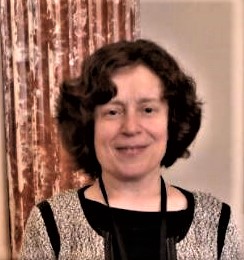
Tamara Gurin
I was diagnosed with CRPS in 2016. By then, I suffered relentless neuropathic pain in my hands, loss of dexterity and was seriously considering going on a disability leave from work. Thanks to the work of Dr. Sarno and his followers, I fully recovered.
As I overcame one challenge after another in my healing process, I promised myself that in case of a successful recovery I would write a book to help others defeat their chronic pain conditions.
After my book Defying The Verdict was published, I became an advocate for the chronic pain patients and created this website to promote mind-body healing to the CRPS patients.
Subscribe to My Blog
Get new content delivered directly to your inbox.
© 2021 Copyright T. Gurin All Rights Reserved
 Complex Regional Pain Syndrome : Your Path To Healing
Thank you for all this wonderful information Tamara! And thank you especially for writing your book. Just looking at the title everyday gives me renewed hope! I am in the early stages of reading it.
One thing you said that has helped put my mind at ease is to remove the time deadline. I keep giving myself “another 3 months to cure myself “ and that only serves to increase the pressure and anxiety! Yes, if emotional traumas caused this over time, it has to take time to sort through and process it all to heal …
Thank you for being there and being a lighthouse for others like me with this diagnosis- in a world where there simply isn’t enough positive information, thank God for you and Rita going public with this website. Many blessings.
LikeLiked by 1 person
Thank you Tamara for this you have no idea how calming it was to read it. God bless you and Rita for all that you do for the rest of us.
LikeLiked by 1 person
Tamara I’ve had CRPS since 1998 26+ years to date. I have been wheelchair bound since 2003 die to a failed spinal chord stimulator surgery which turned into a pain pump which the dr refused to remove for over a week. I joined the Curable groups in 2019. I believe, and achieved some success. But it was in another area; stomach pain! My diet had dwindled to yogurt, white toast, and soft boiled eggs plus milk. That continued for three years plus all kinds of medication’s. I had two scopes by a G.I. doctor and he said there was nothing wrong with my stomach. I was on a lot of medication including opioids for the CRPS pain and he said I had to get off them and they were the problem. I knew I could not. However, joining the groups at Curable started to help to my surprise, my stomach pain. I used graded exposure and other techniques that I learned there focusing on my stomach. Today in 2024, almost 2025 I eat anything I want including spices chili or whatever. I could not even contemplate eating a taste of peanut butter prior to this. However, the CRPS went wanting. One of the comments that Dr. Strack made when I asked him what he thought about CRPS he said “it’s something you don’t want to have.” That did not sit well with my brain so here I am in 2024 and I kind of gave up on the Curable app but just restarted it. Watching podcasts and being a longtime follower of Dr Schubiner’s work plus others I’m beginning to see some light. Because of insurance issues, I cannot afford a mind-body therapist, as I have not yet found one that takes insurance. I am working with a therapist who is eager to learn about PRT and EAET. And so far she’s been somewhat helpful. But just by listening to the podcasts and by beginning to break the “belief” barrier to some extent I am making progress already. CRPS was not on the radar or if it was it was considered very difficult to treat with this approach. That idea needs to be changed and the proof is in the pudding. Thank you for your work and I hope to learn more from your journey.
LikeLiked by 1 person